
It was a summer trip to Bolivia that piqued junior Elise Zaniker’s interest in orphanages. After that life-changing trip, she knew that she wanted to get involved in some way back in the U.S., so she proposed an idea to Wes Priest, an English instructor at University High School. Priest and a group of UHS students followed Elise’s lead and developed a relationship with Niños con Valor, an orphanage in Bolivia.
After Zaniker’s initial visit, about 20 people traveled with her to Bolivia in summer 2015. The group divided their week up at Niños con Valor by playing with the foster kids and working on specific service projects. They even helped paint one of the buildings!
Priest said, “We spent a lot of time with the kids, and we also learned about childcare and childcare systems. When I got back, we wanted to continue with that relationship, and I wanted to get students at our school thinking about the childcare services that we provide [in the U.S.].”
Bringing It Back Home
After helping the orphanage in Bolivia, Zaniker and Priest really wanted to bring their service efforts to a local level so that they could make a difference in their home community. This is when they got the idea to create a Year of Service group at UHS that would focus both on local and international orphanages. In the beginning, the service group spent a great deal of time researching the different childcare systems.
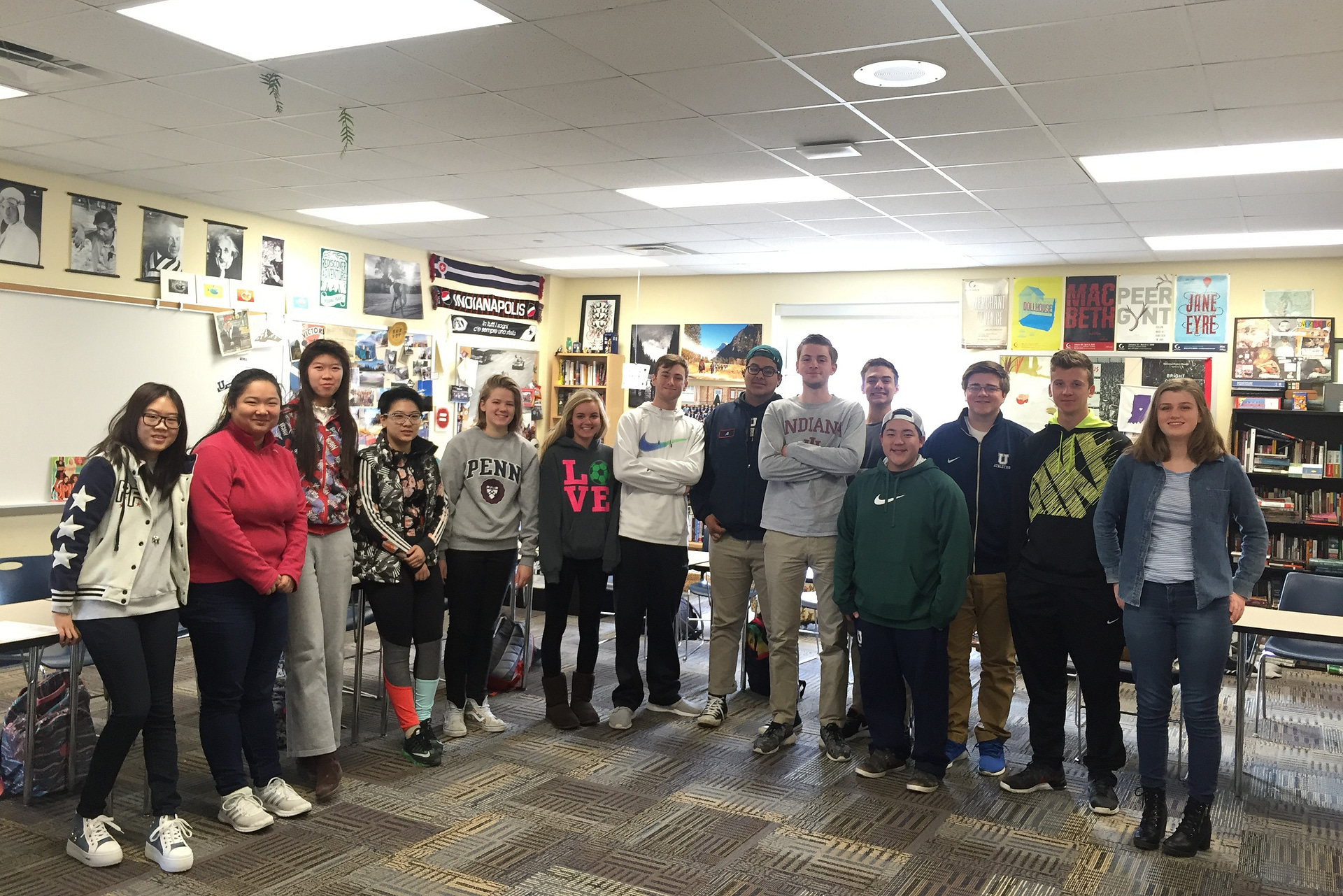
The childcare systems Year of Service group pose for a picture after one of their meetings.
In Indiana alone, there are approximately 9,294 children that reside in foster care. In the United States, an average of 415,000 children reside in foster care every day. Many of these children still wait for adoptive families.
In other words, students at UHS were going to have their hands full! Since the primary need is to find adoptive families for these children and UHS students cannot fulfill that need, it was important for the Year of Service group to research laws and regulations and figure out what they could do to get involved. Not only did they want to use what they learned from their research, but they also wanted to incorporate their knowledge of the Bolivian childcare systems so they could figure out how they could best help and make a difference within their community.
Many discussions occurred in the Year of Service group meetings about the different laws and regulations of local childcare systems. Foster care is not a topic that is often discussed, so the group enjoyed coming together and sharing what they learned with each other and compiling a small list of foster care systems in Indiana they could potentially get involved with.
According to Children’s Rights, welfare systems in the U.S. are less than perfect. The children in these systems face the possibility of being separated from their siblings or pushed from one foster care placement to another. The children lack the stable environment they need, which makes it hard for them to get involved in the community and maintain relationships. Without a stable environment, it can be hard for kids to feel like they are at “home.”
Serving Locally and Internationally
For the first Community Day at UHS, the childcare systems Year of Service group took a trip to The Villages, a local foster care system in downtown Indianapolis. According to their website, The Villages are the biggest not-for-profit child and family services agency in Indiana. They serve over 1,400 children and their families every day.
“At The Villages, we went inside and were introduced to one of the people who worked there, and she talked for about 30 to 45 minutes about what The Villages do, how they help kids, and the different ways that people could get involved,” said Riley Spitzenberger, a sophomore at UHS.
The Year of Service group also learned that there are major differences in the childcare systems in the United States compared to other countries. First of all, the U.S. does not have orphanages. Instead, the U.S. has foster care. According to Princeton University, the U.S. mostly gives foster parents subsidies as payment to care for children privately, rather than offering public care options like other countries sometimes do, which can limit the government’s control over the quality of care provided. Even though fostering a child requires licensing, the quality of care provided still varies. On the other hand, in other countries, a lot of their childcare is provided directly by their government.
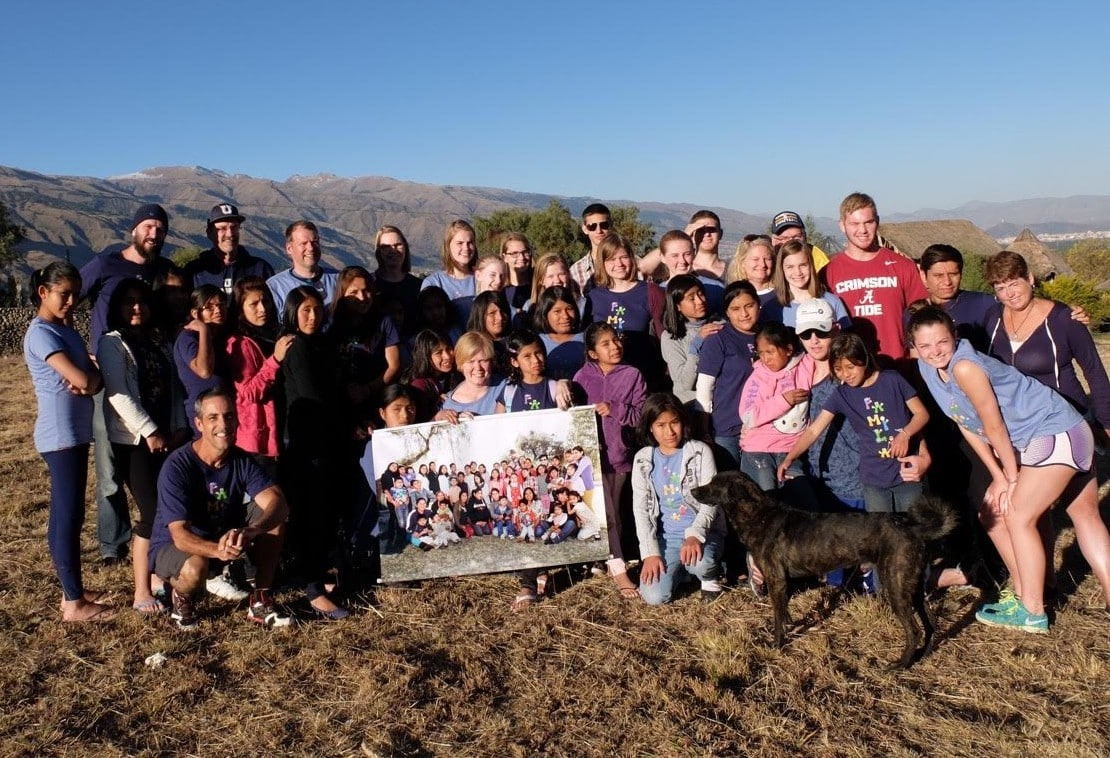
UHS students went on a service trip to Cochabamba, Bolivia and worked with Niños Con Valor for seven days.
Senior Ben Klemsz said, “It was a really cool experience to see how the foster care system here works and learn more about a foster care system that’s close to home compared to the orphanage in Bolivia.” Klemsz also said, “Going to Bolivia is definitely a culture shock compared to where we live. It was cool to see how their systems of support and houses operate because everyone is like a part of the family, and they all have to chip in to help around the house. It’s really eye opening.”
Eventually, a simple, yet impactful idea came to the Year of Service group’s mind to create care packages for the children at Niños con Valor and The Villages. The group wrote a grant and used the $150 to purchase various personal care items such as vitamins and toothbrushes to put into the care packages.
“From here on out, we are going to bring in gently used clothing that we can put in the care packages as well,” said Riley.
A group plans to return to Niños con Valor this summer, and they will bring the care packages with them.
About Year of Service
University High School’s Year of Service is a school-wide program intended to teach students about authentic, sustainable, long-term service that makes a significant impact. There are three levels of participation for students:
- Level 100 (such as the March of Dimes group) is for younger students and focuses on direct service
- Level 200 is for upperclassmen and focuses on a community issue
- Level 300 is a service leadership track and includes participation in the Jefferson Foundation Awards Students in Action program