
It’s a Thursday afternoon in early spring. I’m sitting at my desk; I should be grading papers. My phone buzzes, and I look down to read a jubilant message from one of my mentees. She was just accepted at her top-choice college. I feel her excitement through the dozens of emojis, and a smile forms on my face.
A colleague comes in on a Friday afternoon. A relative has just passed away, and he is clearly upset. We work through the arrangements of when he’ll be gone for the funeral, and we make a plan to cover his classes. We talk about the impact his grandfather had on him growing up. My own eyes start to tear up.
Perhaps I am a softie, but in working for a school that places relationships at the forefront of the learning process, these stories happen often. When we open ourselves to others up in authentic ways, the impact of these connections – of this emotional empathy – is powerful.
In her 2014 book, The Empathy Exams, author Leslie Jameson writes:
Empathy isn’t just something that happens to us — a meteor shower of synapses firing across the brain — it’s also a choice we make: to pay attention, to extend ourselves. It’s made of exertion, that dowdier cousin of impulse. Sometimes we care for another because we know we should or because it’s asked for, but this doesn’t make our caring hollow. The act of choosing simply means we’ve committed ourselves to a set of behaviors greater than the sum of our individual inclinations.
The Disconnect In Connection
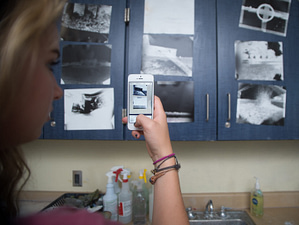 Today’s world is full of technology designed to keep us connected. The fast-paced transfer of information happens seamlessly, and digital collaboration allows students and teachers to work together anywhere. But despite all this good, somehow, we have grown distant. Social media’s constant demand to check in, swipe right, retweet, snap, yik yak, like and scroll down does give you the possibility to carry myriad conversations in your pocket, but what does it do to the conversation in the room?
According to a 2014 article on livescience.com “observational researchers found that many coffee shop visitors sitting in pairs or in small groups checked their phones every 3 to 5 minutes, and usually held or placed their phones on the table in front of them.”
Intrigued, a follow-up experiment by lead researcher and Virginia Tech Blacksburg psychology professor Shalini Misra, revealed “that during conversations where someone pulled out a smartphone while talking, the participants rated the conversation as less fulfilling and felt less connected to their partner than in conversations where no one pulled out a phone.”
A Focus on Empathy Education
Making the choice to connect is at the heart of University’s mission, and it has led to another choice, to explore empathy as the theme for the year.
From Christopher’s journey to understand another’s perspective in The Curious Incident of the Dog in the Night-Time, to Hayley’s struggle to let her guard down in The Impossible Knife of Memory, to the way connection with people in their darkest hours fuels the work of Dr. Paul Farmer in Mountains Beyond Mountains and Bryan Stevenson in Just Mercy, our 2016 summer reading texts have laid the foundation for meaningful conversations around service, self and others — conversations designed to help our community grow.
Year of Service Kickoff
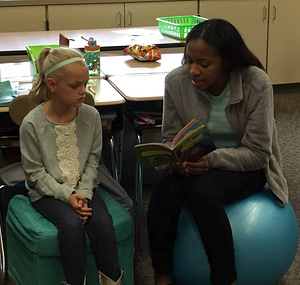 Several assemblies and community meetings have already addressed this topic, and on Thursday, September 15, we will start another phase of the discussion with our Year of Service Kick-Off Day.
The day will begin with a panel of community members talking about the service work they do and the impact stepping out of their comfort zones to make connections with different people has had on them. Students will then have the chance to explore different issues before selecting a service opportunity that best fits their interests and skills.
In a 2011 interview, astrophysicist Neil deGrasse Tyson observed that:
[H]umans aren’t as good as we should be in our capacity to empathize with feelings and thoughts of others, be they humans or other animals on Earth. So maybe part of our formal education should be training in empathy. Imagine how different the world would be if, in fact, that were ‘reading, writing, arithmetic, empathy.’
This year at University, we are trying to do just that. I hope you will join us in following this journey.
Alicia LaMagdeleine is an Assistant Head of School at University High School.